“Unexpected fledgling in the dragonfly area. Please wait.”
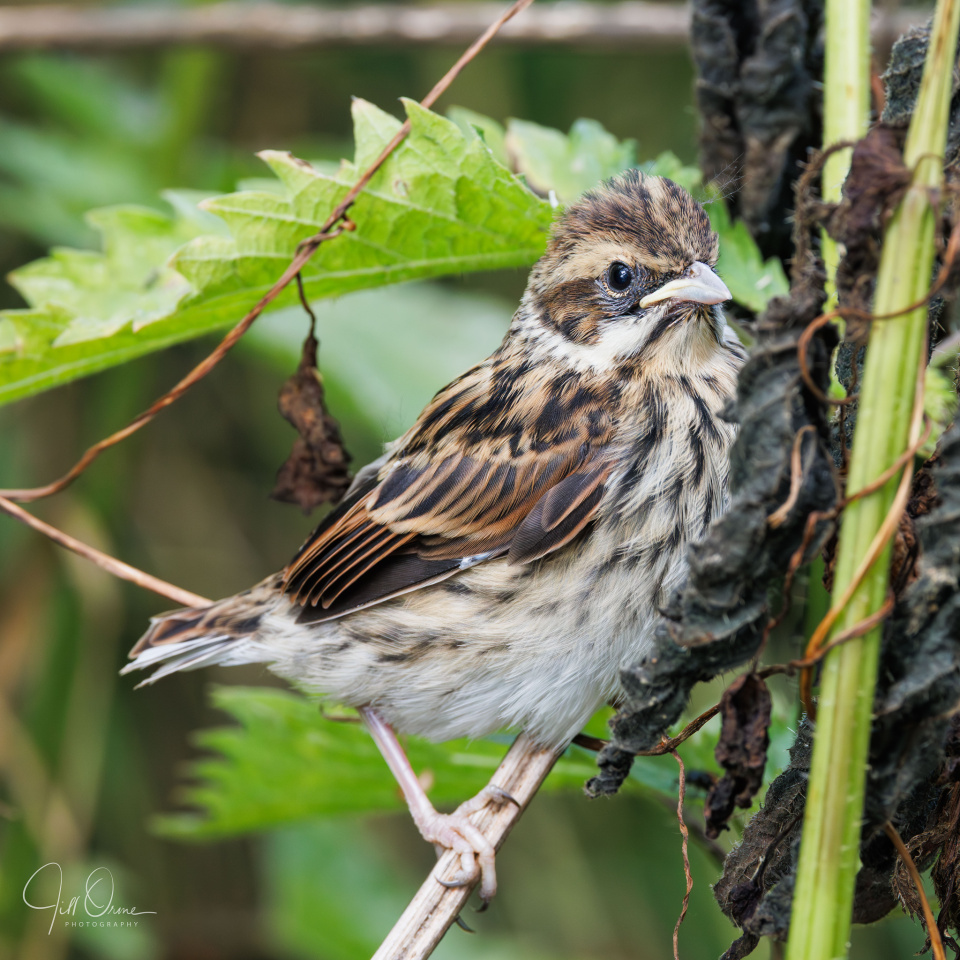
So there I was this afternoon at the old wharf at Cleeve Prior Mill, rummaging about for Odonata by one of the fishing pegs on the river bank, when there was a sudden flurry of movement near my feet, and a bird flew out of the undergrowth, squeaking in fright, and landed on a nettle maybe eight or ten feet away from me. And I looked at it, and it looked at me, and I veeeeery slowly lifted the camera and took a short burst of shots. And then we looked at each other for another couple of seconds, while I ran it through the data banks and came up with Reed Bunting fledgling… and then it suddenly took off again, flew up the bank, and dived into the thick of the nettle bed.
If I’ve made this sound like a dramatic encounter, for once I’m not exaggerating – in fact I stayed rooted to the spot, with my heart beating much faster than usual, for several seconds after the bird had left. Once my breathing settled and normal brain service resumed, I remembered to check the camera and got my second surprise of the afternoon, when it turned out that all three photos I’d taken of the fledgling were in focus. There’s nothing I can do about all that ugly dead vegetation, sadly – the anglers have been spraying weedkiller around recently, to open up paths down to the fishing pegs – but I can forgive the artistic deficiencies of the image because it captures a very special moment.
The Reed Bunting breeding season runs from April or May to August, depending on the weather, and in that time a female will probably have two and possibly three broods, often to different males. Each clutch usually contains four or five eggs, which she will incubate for about thirteen days. After hatching the chicks are fed by both parents for a couple of weeks in the nest, and then for a further period once they’ve left the nest and dispersed for safety into the surrounding area. Continued parental care is crucial, because they usually leave the nest before they can fly.
There’s a Reed Bunting fact file here, and a quite nice film here of fledglings noodling about and calling for their parents to bring them food.
R: L2, C10, D20.