I had to take the car to Stratford this morning for its first MOT test (THREE YEARS??? How did that happen?!), and R elected to come with me, rather than staying at home through what was forecast to be a pretty miserable day. In the event he was pleased with his decision, because it stayed dry right through to the middle of the afternoon, and at times was properly warm and sunny. We had lunch at BTP, and then walked down to the river, over the Old Tramway Bridge and along through the recreation ground to Lucy’s Mill Bridge, before cutting back up through town to collect the car.
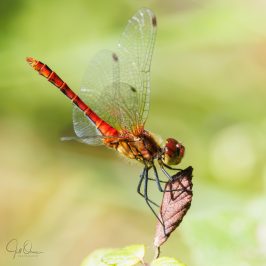
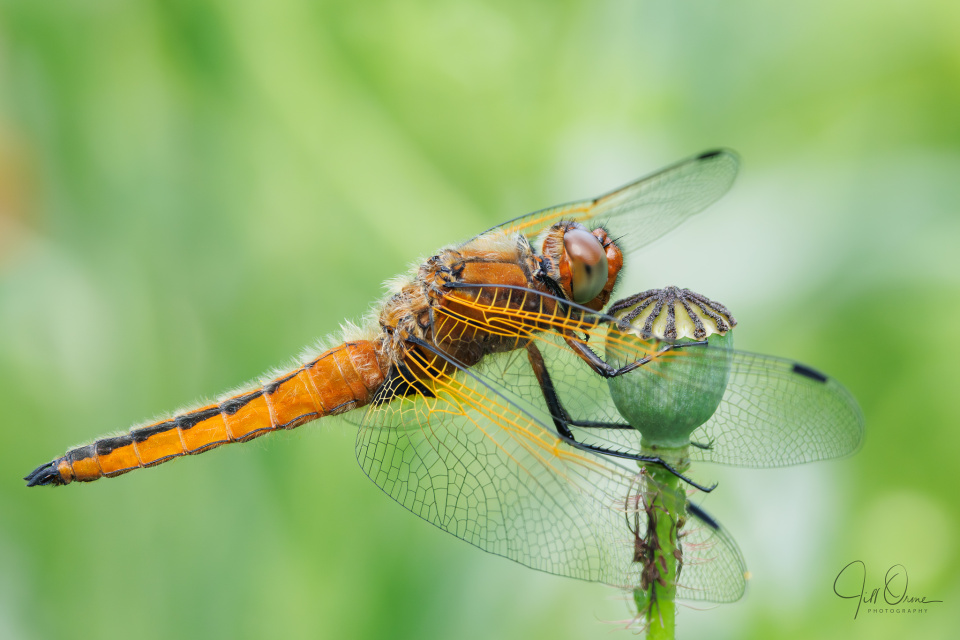
The Council has sown a strip of ground in the rec’ with wild flower seeds, and as we walked along beside it, enjoying the mix of poppies, corncockle and cornflowers among the ubiquitous ox-eye daises, we spotted first some Banded Demoiselles and then a couple of immature Scarce Chasers, flying around the flowers and neatly picking off some of the pollinators. “Red!” I said with satisfaction, lining up on a Chaser. “That will do very nicely for this week’s Tiny Tuesday prompt.” You might, of course, argue that he isn’t actually red, but orange. But I would reply that his binomial name, Libellula fulva, actually means ‘tawny dragonfly’, and ‘tawny’ describes a kind of red colour. Reddish, at least. Red enough.
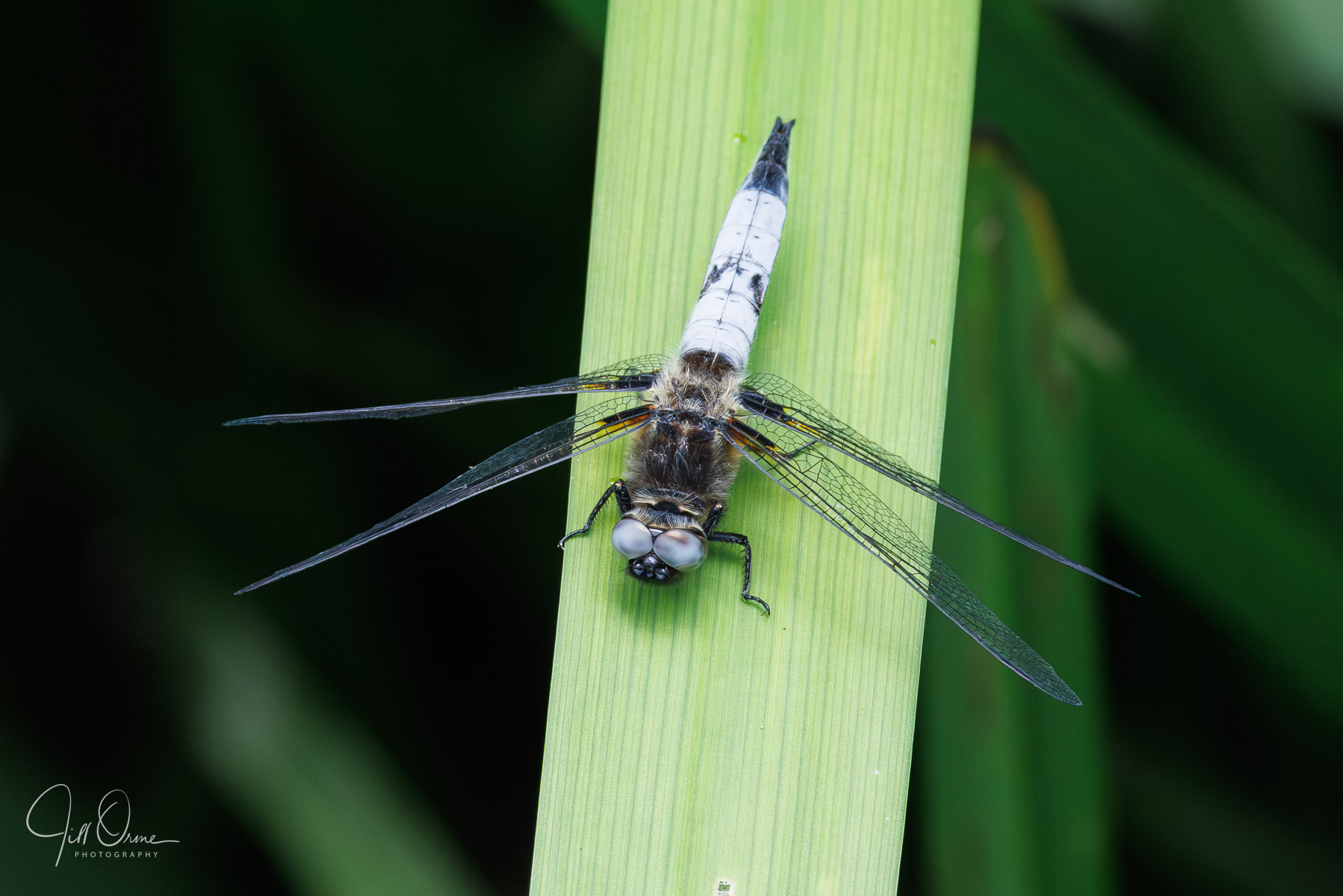
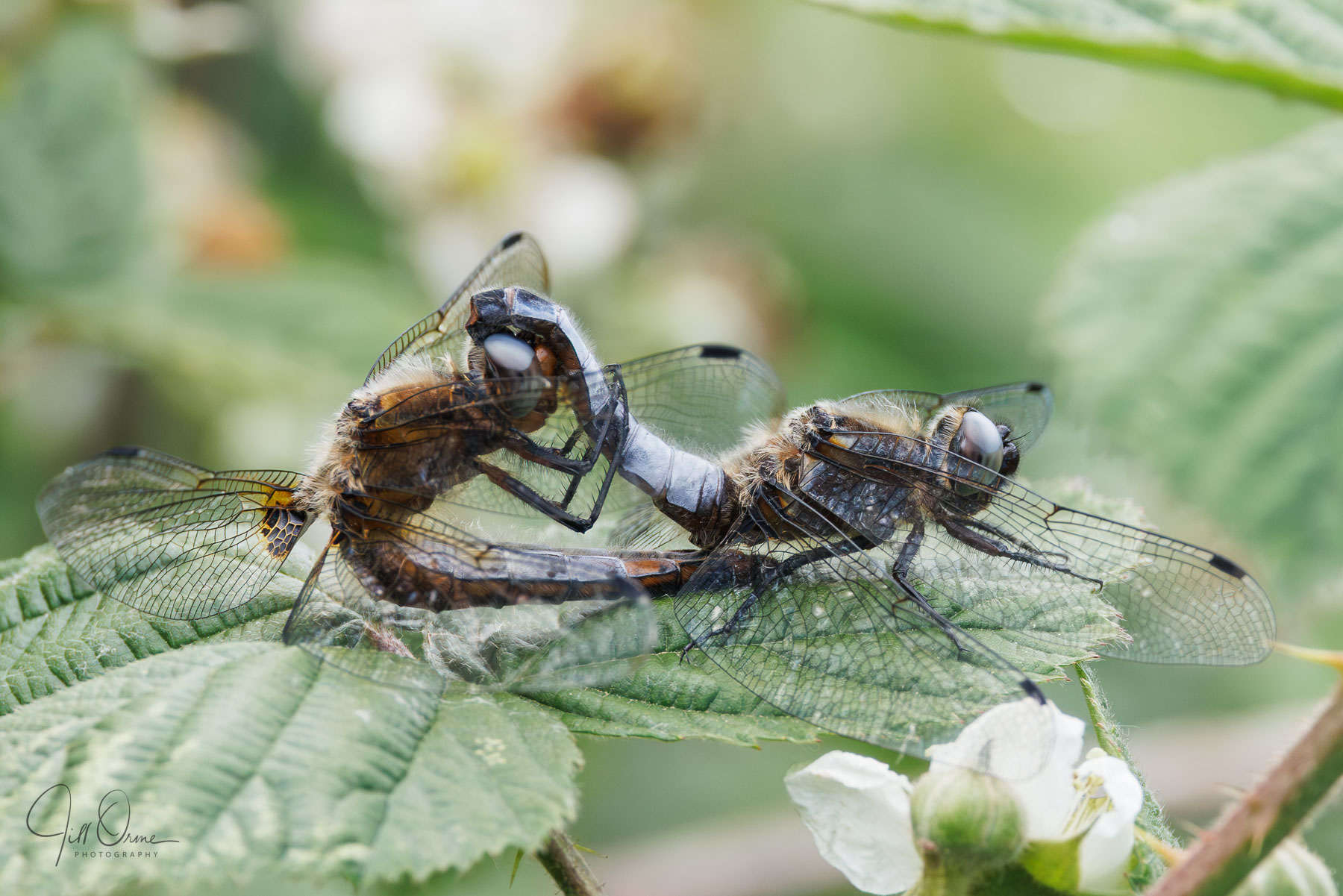
I’ve talked before about the physical changes a male Scarce Chaser undergoes as he matures, but if you’ve never seen these dragons, and haven’t been able to picture what I was talking about, my second photo shows a mature male that we spotted a few minutes later in the reeds below Lucy’s Mill Bridge, and if you compare the two specimens I’m confident you’ll agree that the transformation is dramatic. The dark patches in the powdery blue coating of the mature male’s abdomen show that at least one female has grasped his abdomen during mating, rubbing away the pruinescence with her or their legs – and again, if that’s hard to picture, my third photo should help. This shows a pair of Scarce Chasers in cop, resting in the mating wheel position on some bramble on the bank of the river – the female below and to the left, and the male above and to the right. The female will have started out looking much like the immature male in my main image – you can see what I mean in this photo from last year – but has now darkened to a dull brown. Interestingly, if she lives long enough she’ll acquire the same blue pruinescence as the male, while keeping the jagged black marking along the midline of her abdomen.
R: L2, C10, D12.