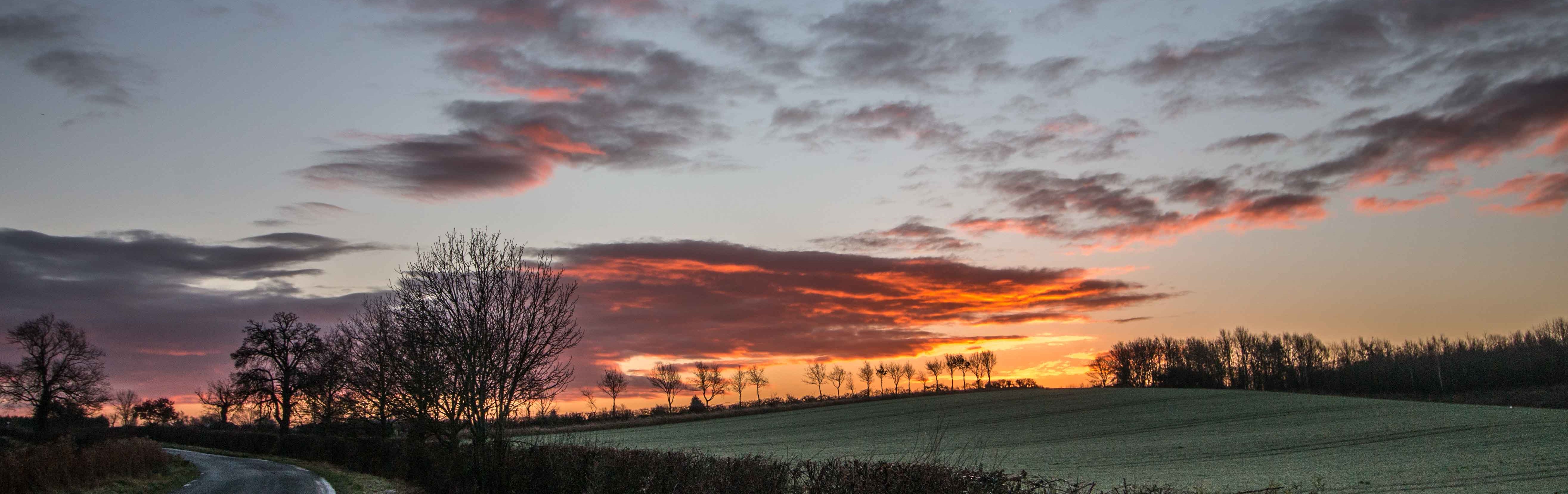
Brandon Marsh used to be part of my usual beat, but fell off it about five years ago, after a couple of trips when most of the marsh was flooded, the hides were inaccessible, the café was closed, and I came away with almost nothing on camera. Today though, R had to be in Warwick for several hours, and after dropping him off I headed over to the Brandon Reserve because it was the closest wildlife site I could think of, and I knew I’d never be more than a few minutes away from shelter, should the clinging mist turn into more active precipitation.
There’s currently a pair of Firecrests at Brandon Marsh, which are reported regularly but which I knew were bound to be elusive. And sure enough, I didn’t see them on either of my visits to their alleged roost site today, but I was still very happy to have gone to Horsetail Glade, because there was a birder sitting on the bench there who gave me a detailed run-down of exactly what I might hope to see from which hides, and his advice helped me to a day count of forty eight species, six of which were new for the year.
Better yet, my new acquaintance had baited the ‘Conservation Area’ barrier just in front of the bench with a sprinkling of bird food, and among the small birds coming in to collect their free supplies were a couple of Marsh Tits – a bird I’d never seen before. This isn’t all that surprising, because they’re a Red Listed bird in the UK, with the BTO estimating that the national population has declined by 80% over the past sixty years. These days the BTO and the RSPB agree on a UK breeding population of around 29,000 pairs, compared with over two million breeding pairs of Great Tits and over three million pairs of Blue Tits. That said, the Marsh Tit is doing much better than the very similar Willow Tit, whose population has declined by around 96% over the same period, to a breeding population of around 2,750 pairs; there’s more about the problems it faces, and current conservation efforts to protect it, here.
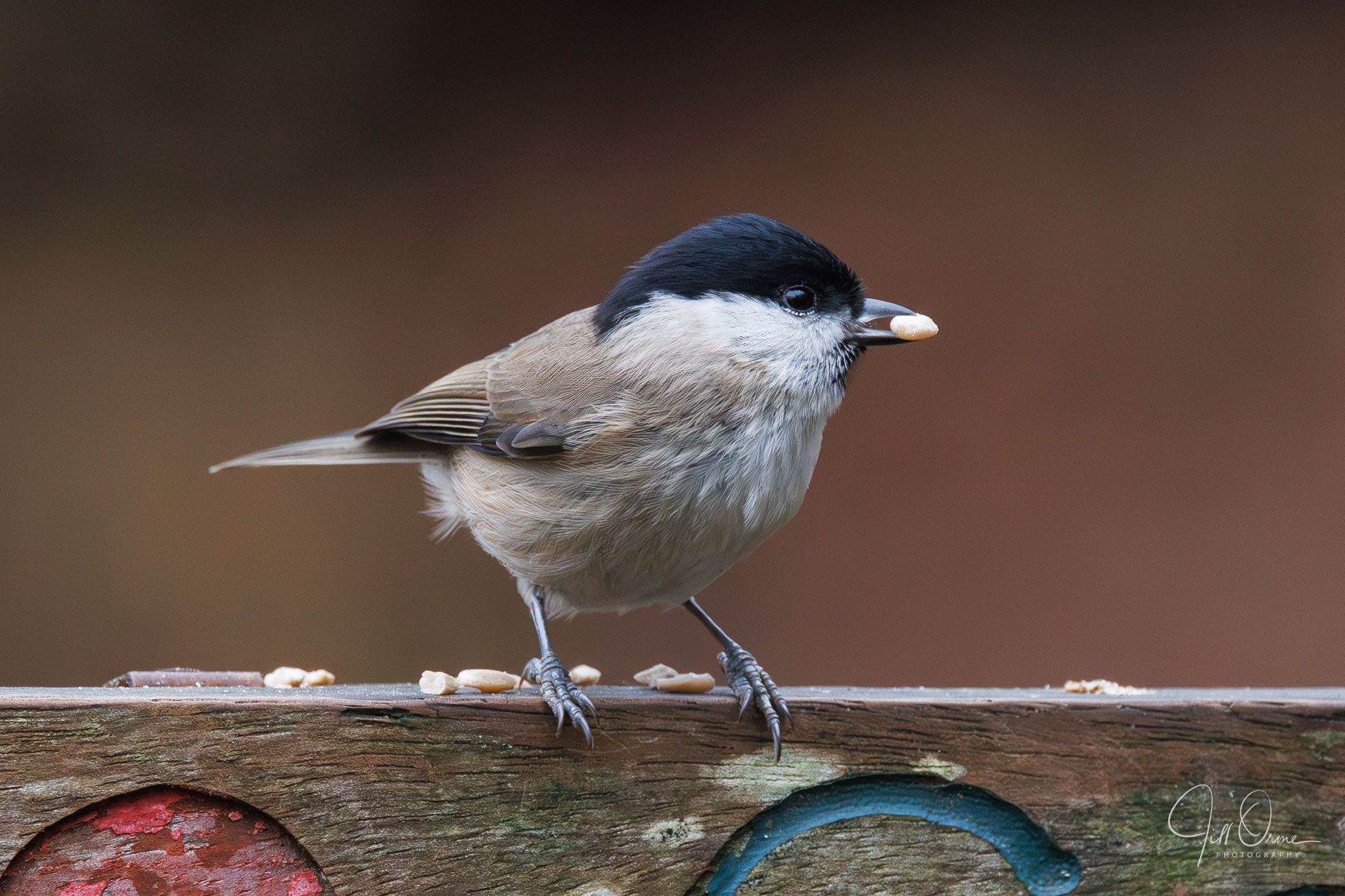
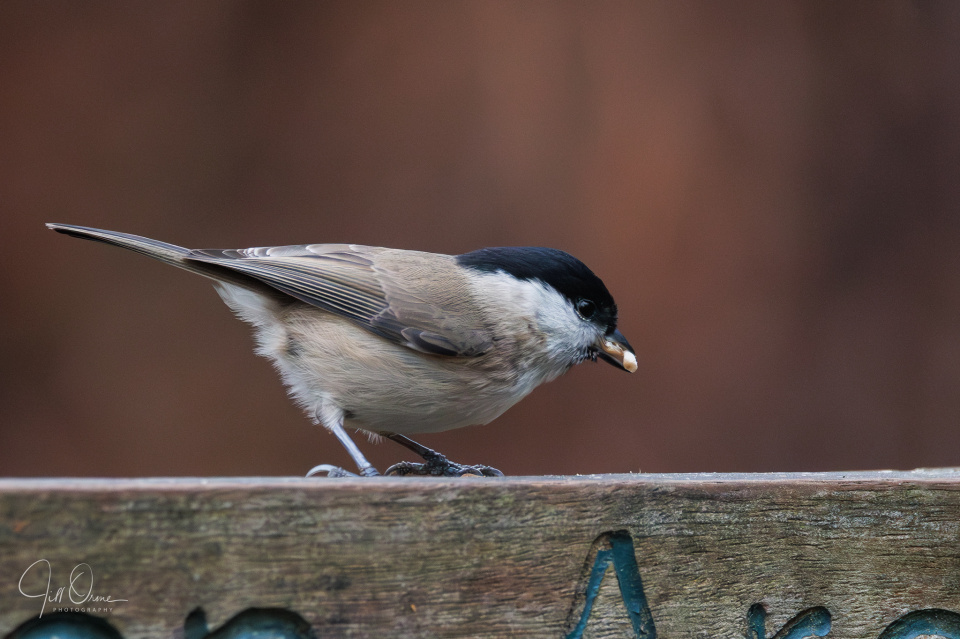
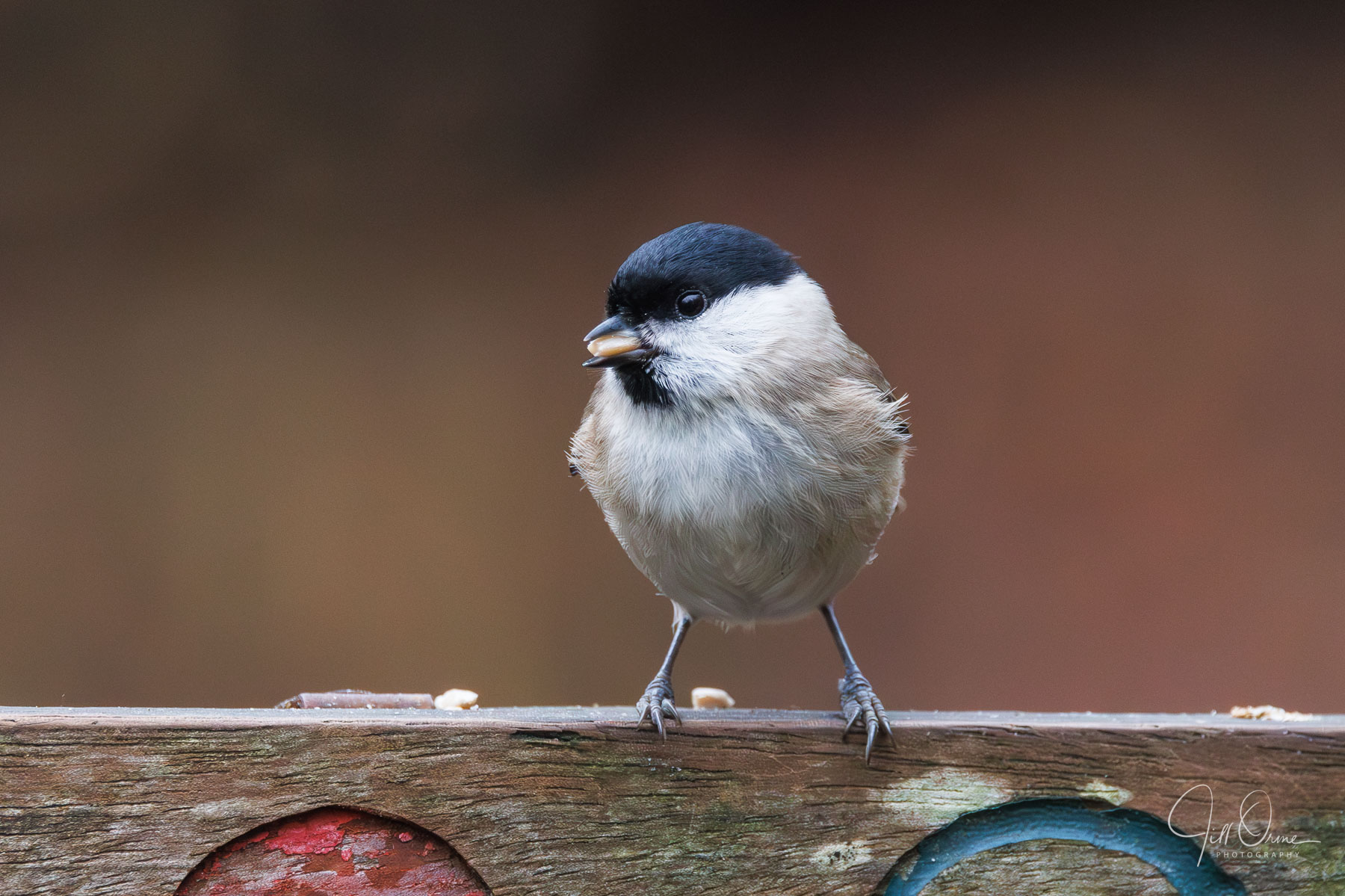
The Marsh Tit is a pretty little bird, about the size of a Blue Tit, with a stone-coloured back and wings (Farrow & Ball: Blue Lias), buff underparts, white cheeks and throat, and a neat blue-black cap and bib. Its legs are grey, and its black bill has a pale mark on the cutting edge near the base, in contrast to the Willow Tit, whose bill is entirely black. Having watched a couple of them today, I’d say that they’re quite assertive – neither seemed in the least bit fazed by the presence of several photographers, and at one point one of them came so close to me that the camera failed to find focus before it moved on again. I’ve included three photos here, simply because I couldn’t choose between them, but I’m especially fond of the main image because it shows the organised and efficient way the birds were collecting and removing food. Marsh Tits are renowned cachers of surplus food, with excellent memories for the locations of their hidden ‘larders’, and today’s pair were clearly set on taking off as much as they could carry to hide it away against leaner times.
The average life expectancy for a Marsh Tit is just two years, due to poor survival from year to year, but the oldest known bird was 11 years old, and where they do survive from one breeding season to the next, pairs are monogamous and remain relatively sedentary within their chosen territory. They prefer to live in established deciduous woodland, especially where there’s a dense understorey of shrubs, but they will sometimes appear in established gardens in winter.
You can hear the Marsh Tit’s distinctive call here.
R: L2, C4, D11.


