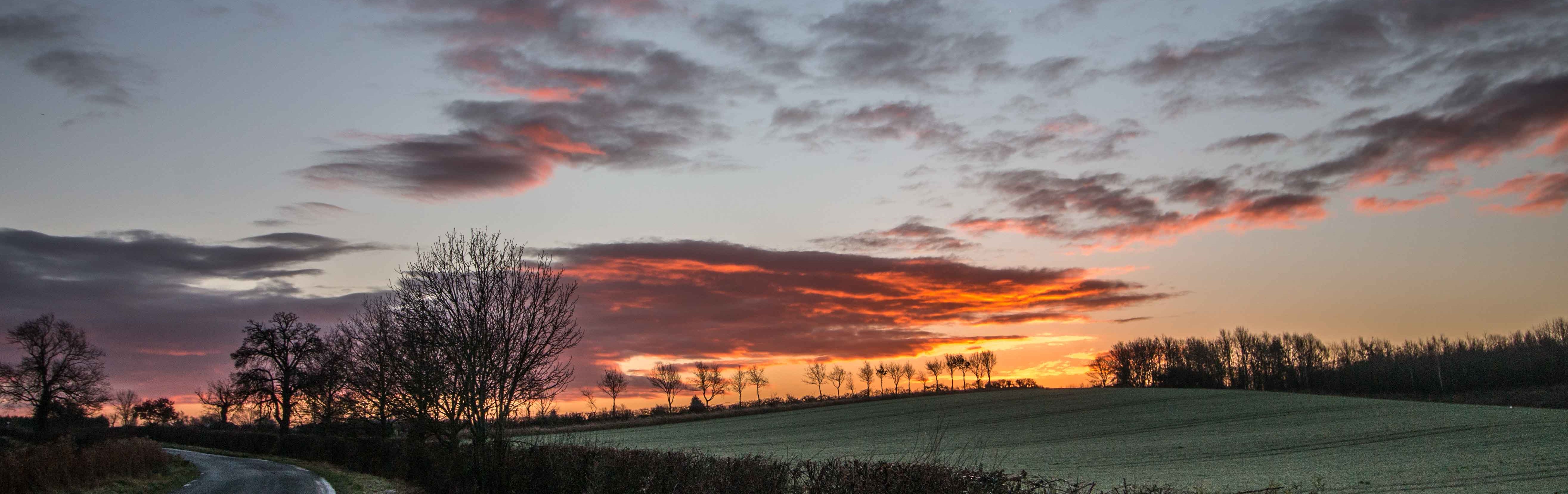

I’d hate you to look at this photo and think that the weather had dramatically improved since yesterday: it was perishing, and for most of the day it was at best overcast as well. This afternoon we had a rain storm that sounded like someone throwing buckets of gravel at the windows. But, for about twenty minutes this morning the sun came out, and provided you ignored the temperature, and the buffeting wind, it was almost bearable. This was the point at which the inverts all apparently decided that if they were going out to grab some lunch it had to be now or never, and suddenly the garden was so full of flying things that I hardly knew where to point the camera. But as I’ve done so many bees recently (or, let’s be honest, so many Hairy-footed Flower Bees), when I realised that there was a Dotted bee Fly drifting around the pulmonaria I decided to concentrate on him, and try to get the best image I could of his spotty wings.
As noted by Buglife, the markings on its wings make the Dotted Bee-fly the most easily recognised of the four UK species that have this narwhal-like proboscis. It’s not as common as the Dark-edged Bee-fly, though it’s relatively widespread across southern England, and is now found up into the Midlands. It reached Leicestershire, in the East Midlands, in 2019. The maps against each account in the Dipterists’ Forum Identification Guide show the species’ distributions, and these graphics make it pretty clear that unless you happen to live in the south-west of England you’re unlikely ever to run across either a Western or a Heath Bee-fly – certainly I’ve never encountered either one. I’m quite happy with the two species I do get here though, and I confess that seeing these spotty wings always gives me a slight extra frisson, because even now the Dotted Bee-fly is much less numerous here than the Dark-edged. In fact, the first time I ever recorded one the iRecord system generated a warning, because none had ever been logged in this area before.
For extra information on this handsome fly….
(Ed: Is it handsome, actually? JDO: Why, yes – I think it is. A bit chunky, maybe… and its habits are unappealing, certainly… but – yes – I’d describe it as… well, striking, at any rate. And whose journal is this, anyway?)
… I’d recommend this BBC Wildlife Magazine article, as well as a really good piece from the Natural History Museum that also touches on the UK species that don’t have the permanently extended proboscis. Of these, I’ve only ever found a single specimen of Villa cingulata, the Downland Villa, though I hope that as climate change keeps extending their territories, sooner or later I might run across some of the others.
R: L2, C7, D6.