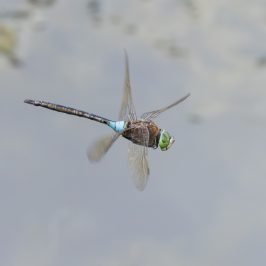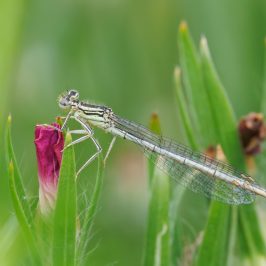
It was a pretty grim day today, light-wise, though it only tried to rain briefly a couple of times. But it was warm enough for me to think it was worth checking our pond and our neighbour’s for emergent Southern Hawkers. None had made an appearance overnight, but from now on I need to check every morning, to try to catch the tenerals before they take off into the trees.
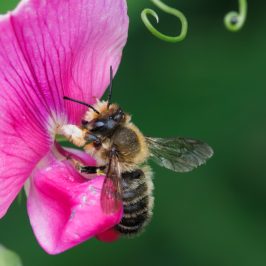
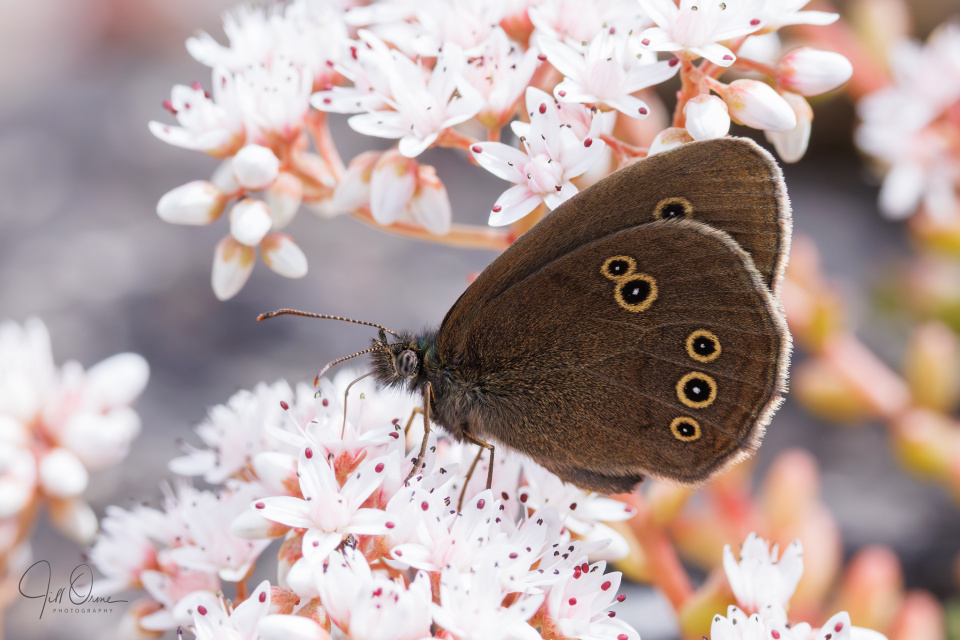
On my way back down the lane from our neighbours’ land I had to walk past Tilly’s field, which has been devoid of butterflies since its current owners allowed it to turn into an overgrown wasteland. Today though, the wall that separates the field from the lane, which has white stonecrop growing all along the top of it, was busy wth fresh Ringlet butterflies. Other, lesser pollen and nectar feeders were also trying to enjoy the stonecrop, but the Ringlets were having none of that kind of thing, and chased away all the honey bees and hoverflies that tried to join the party.
The Ringlet is one of our most numerous and widespread butterflies, found almost everywhere in the UK except the far north of Scotland and the Northern Isles. Over the past fifty years its numbers have gone up by over 300%, with most of that increase happening in the last quarter of the C20th. One author has tentatively linked this with a decrease in atmospheric pollution, stating that the Ringlet’s distribution coincides with that of certain lichens which are known to be damaged by sulphur dioxide in the atmosphere, and suggesting that the butterfly might be adversely affected by high sulphur levels as well.
Unlike many species of butterfly, the Ringlet thrives in cool, damp conditions, and a very hot summer can cause its numbers to crash, with population recovery taking several years. Its preferred habitat is woodland, or damp, partly shaded grassland, and because its dark colouring allows it to absorb heat from the sun very quickly, it can be seen flying on days when most other butterflies stay under shelter. Females are unselective about oviposition sites, dropping their eggs over coarse grasses, where some will stick while others fall to the ground. The larvae are similarly unfussy, and will feed on a range of coarse grasses. They hibernate during the third instar phase (out of five), resuming feeding and growth in the early spring, and pupating in the early summer. There is only one brood per year, and the adult flight season is quite short, so it’s worth noticing and celebrating these unusual and striking butterflies while they’re around.
R: L2, C10, D30.