I’ve reduced the half-dozen books I used to have on British butterflies to just three: Butterflies of the West Midlands, which has good local information including walks and likely sites for spotting various species; Peter Eeles’ excellent Life Cycles of British and Irish Butterflies; and the Butterfly Conservation field guide Britain’s Butterflies. These cover all my butterflying needs (and to be honest, I could easily do without the field guide, which is too big for me to want to carry it around), and losing the others has freed up valuable shelf space for more vital books about Odonata.
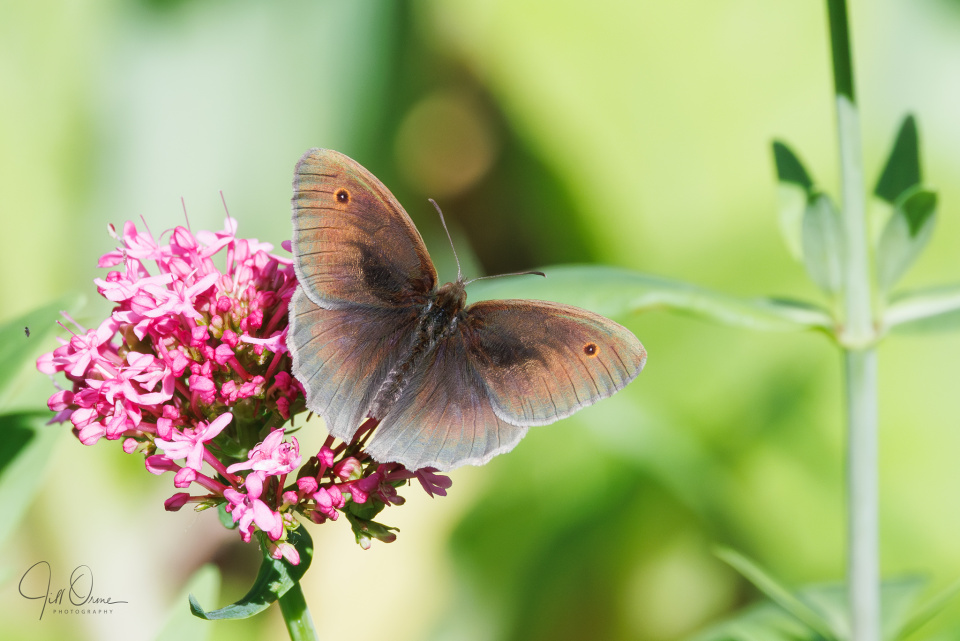
The reason I mention this is that the local guide, which was published in 2016, has the flight period of the Meadow Brown running from mid-June to mid-September. Peter Eeles’ book, published in 2019, brings the start forward to the beginning of June; and the Butterfly Conservation field guide, published a year later, brings it forward again, to the last quarter of May. Obviously these timings are going to vary a little according to the conditions in any particular year (though Meadow Browns seem less dependent on good weather than many other species), but it’s clear that the experts believe this butterfly is appearing earlier than it used to. My own data supports this, with first sightings on 14th June in 2021 and 2022, 13th June in 2023, 5th June in 2024 and 30th May last year. This year I spotted my first one in the Community Orchard at Cleeve Prior on 28th May, though this male is the first I’ve seen in the garden.
None of the species accounts I’ve read has ever pointed out that there’s a hint of blue iridescence in the overwings of a Meadow Brown, but I’ve photographed it before and I think you can see it quite well here. It’s more readily apparent in males because their wings are darker and plainer, and don’t have the bright orange patches that make it so easy to distinguish the females; instead they have a darker patch on each forewing, known as a ‘sex brand’, which contains specialist scent scales. I’m indebted to Butterflies of the West Midlands for the information that these scales produce “an unpleasant scent, likened to ‘dirty old socks’, which is irresistible to the female.” Please feel free to make your own inappropriate comment at this point – I’ve decided it’s probably better to leave mine unsaid.
R: L2, C10, D14.