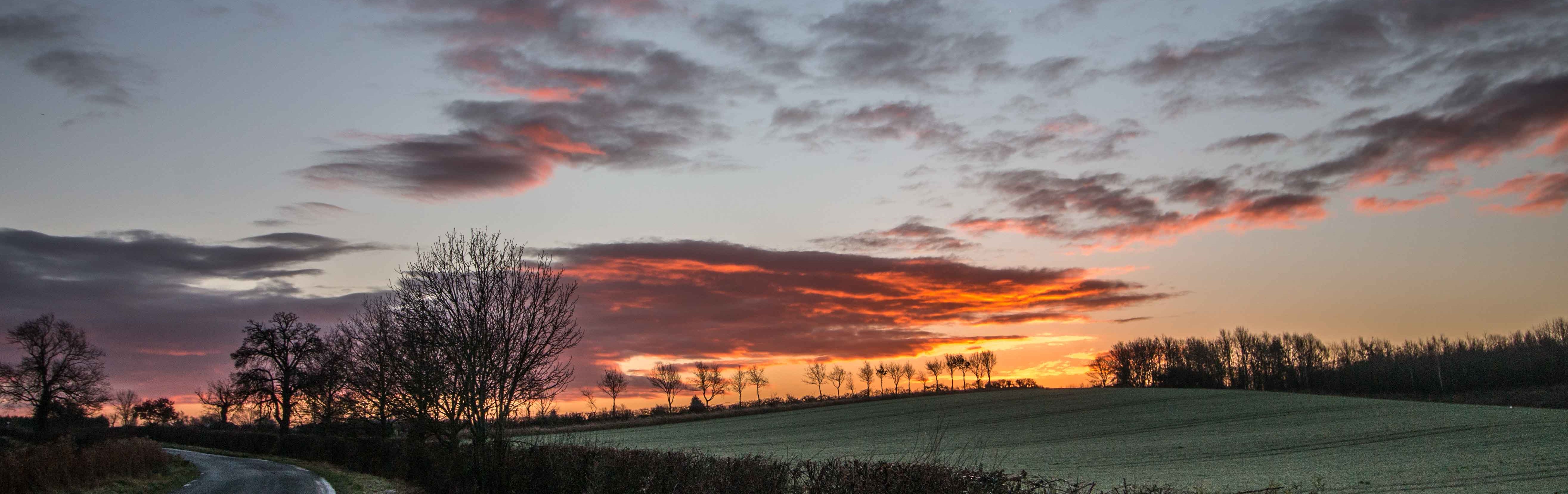

I don’t have much to say about today: it was cold and dark, and R and I – who had to spend the morning and the first half of the afternoon dealing with the kind of tedious, irritating domestic nonsense I feel we should be excused now that we’re old and feeble – both ended up feeling equally bleak. At about 3pm I finally decided enough was enough, and announced that I was going out. This was ridiculous really, because it was too cold for a pleasant walk, such light as there had ever been was already fading fast, and the coffee shops were likely to be closed by the time I reached them. Nonetheless, R’s hand shot up (I might have imagined that), and he made noises along the lines of, “Please, Sir, me, Sir – can I come too, Sir?” So we went. And while it wasn’t an especially enjoyable walk, and there were virtually no birds around, and the best coffee shops were indeed shut, it was still better than being at home.
Among the – now departed – flock of Black-headed Gulls hanging around Stratford this winter, there have been a couple of juvenile Herring and two or three adult Lesser Black-backed Gulls. This is a Lesser Black-backed, though from certain angles it looks quite a lot like a Yellow-legged, and the Obsidentify app is a bit equivocal about the identification. However if you look at this post, you’ll see that a Yellow-legged Gull is paler than this on the back and wings. It’s also bigger, though that’s not especially useful when you’re looking at a single bird. I don’t think of myself as any kind of expert on gulls (or anything else), but in case they should be useful to you in some highly improbable gull-identification crisis situation, these are the rules of thumb I use on the four species that are most readily confused:
Herring Gull: big (1kg-ish), pale grey wings, pink legs. Bold, omnivorous and opportunistic feeder. Noisy. Common but declining, and now Red-listed, so stop being so selfish and give it a couple of chips.
Yellow-legged Gull: similar in size and colour to Herring, but with yellow legs. Very unlikely to come after your chips, especially in summer, because it’s only ever a winter visitor to the UK.
Lesser Black-backed Gull: Smaller than Herring and Yellow-legged (c. 800g), but with longer and slimmer wings. Slate-grey on the back and wings, though variable: three races are recognised, and our native one is the palest. Yellow legs. Unlikely to steal chips.
Great Black-backed Gull: massive (c.1.5kg – which is appreciably bigger than a Red Kite), black on the wings and back, pink legs. Eats absolutely whatever it likes, but luckily for your chances of holding on to your chips, you’re fairly unlikely to meet one.
The only other thing to say about these four species is that the three big ones all take four years to reach adulthood, and for each year of their juvenile development they grow different plumage. The gull guys can cast a seasoned glance at any big, streaky gull and explain to you why the shape of its bill or the density of the streaks or something to do with its eyes makes this a second or third summer whatever it is – but getting two of them to agree with each other is a different story: I once asked quite innocently for an ID on a juvenile gull I’d photographed at Farmoor, and the row between the experts in the birding group went on for weeks. I learned my lesson that time and now, as far as I’m concerned, “juvenile gull” describes any such bird quite well enough.
R: L2, C6, D8.


