What with one thing and another the morning ran away from me, and it was after 2pm when I finally made it into the garden. By this time it was unseasonably hot, and many bees and flies were unhappy enough with the heat to be seeking shelter behind and under leaves, so I’d only managed a handful of shots by the time I got down to the far end of the wild garden.
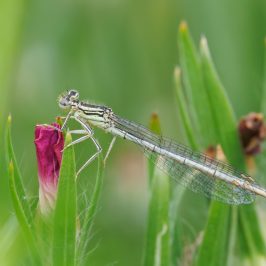
I was leaning over the nettle bed, searching it for bugs and hoverflies, and not looking where I was putting my feet, when I accidentally kicked a root and shook the nettles, putting up a Large Red Damselfly that I hadn’t spotted. I cursed roundly, as you’d expect, but consoled myself with the thought that it was probably the same male I photographed on Tuesday. So it’s lucky that the damsel, after fluttering around in irritation for a few seconds, decided that I wasn’t actually threatening and came back down on the nettles, because when I got a proper look I realised that it was a female – the first of the year here, and already mature and ready to breed.
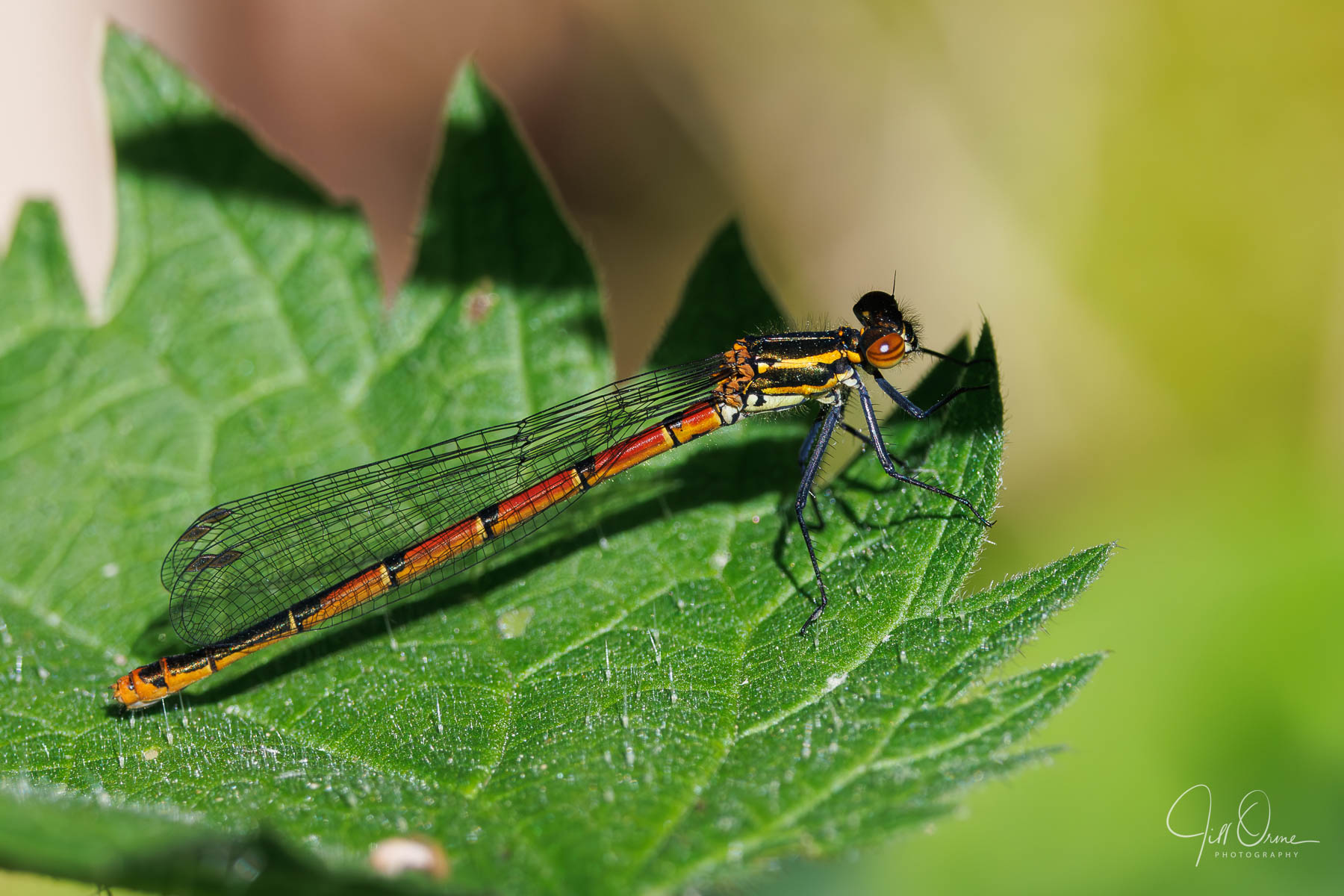
If you compare her with the male, you’ll see that her abdomen is thicker than his, with slightly different markings, but it’s the shape of the ends of their respective abdomens that really gives away their sexes. He has a set of claspers for grasping the female’s pronotum (neck plate) during copulation, while the reproductive organs at the apex of her abdomen are designed firstly to lock together with the male’s secondary genitalia to receive his sperm, and then to insert her fertilised eggs into aquatic vegetation. It all sounds a bit strange, and I suppose the copulation part of it looks a bit odd too, but even though I believe I’m right in saying that Odonata are the only insects that mate like this, they’ve been doing it successfully for millennia, so it obviously works.
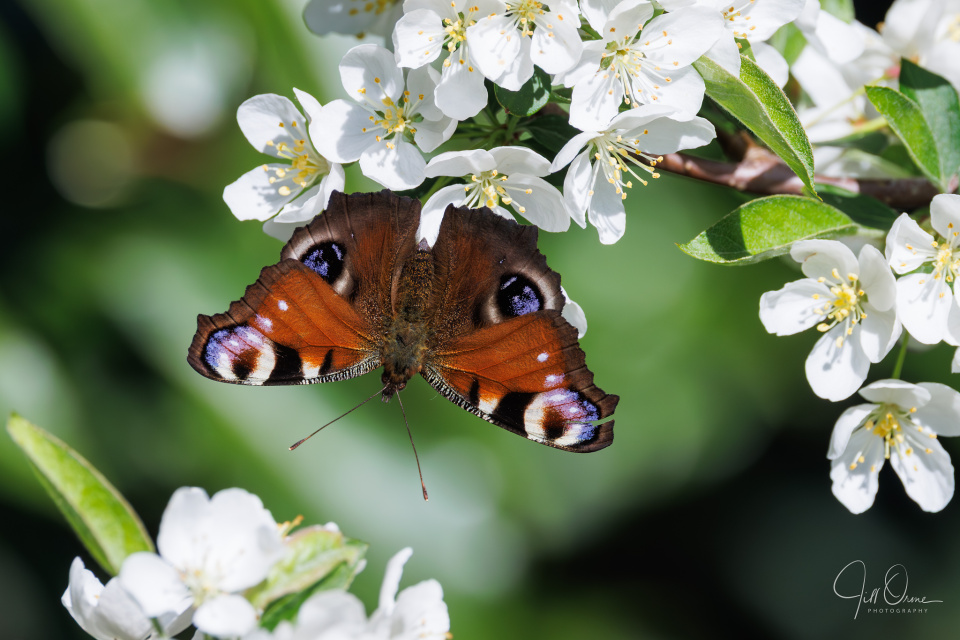
After politely thanking my subject I set off back towards the house, quite happy, walking quickly and not even bothering to look for anything else – because at this point in the year, what could possibly trump a damselfly? But when I saw this Peacock nectaring on the little ornamental crab apple I added to the rose bed a couple of years ago, I simply had to try to capture it because it was such a lovely sight. The shrub is having a very productive season, and apart from that split on the outer edge of the left forewing the Peacock seems to be having a pretty good spring as well. Certainly it was loving the crab apple, working all over the clusters of blossom and snapping its wings at any other insect that tried to feed near it. I’m very happy with the photo, but just a bit concerned that without sight of my raw file you might think I’ve made a composite. I promise you I haven’t though – I’m far too lazy for that.
R: L2, C8, D14.