All around the country over the past couple of weeks, people have been reporting damsels, and in some cases even dragons, and while naturally I’ve been very happy for them [*grinds teeth*], I’ve been finding the lack of Odonata here quite frustrating. So this afternoon I decided to do a census of my local sites, starting in the village and then working my way round to Cleeve Prior Community Orchard, down to the River Avon at Cleeve Prior Mill, and finally over to Warwickshire, and the river and its feeder stream at Barton. I found precisely zero damsels and dragons at any of the sites, but (surprisingly even to me) I found that I didn’t mind too much, because I was out and about in the fresh air, doing my Thing, and I had an optimistic sense that any corner I turned might just be the one that would bring me face to face with a Large Red Damselfly or a Banded Demoiselle. Nodonata (©) today – but tomorrow, who knows? The season is coming, and from here on, any warm day could be the one that kicks it off.
I had a few surprises on my circuit, the first being that over the winter all the bog bean has been cleaned out of the big pond at the Community Orchard, leaving behind a huge bare stone cistern with no obvious signs of life. I dare say this needed doing, because last season the plant was staging a bit of a takeover, but given that one of the other ponds is so full of grass and weeds it’s essentially a tiny marsh, and another is almost hidden under a blanket of crassula, it’s not where I would have started. I should probably avoid being too vociferous about this though – they might ask me to put my energy where my opinion is and commit to some voluntary gardening work, and that’s very much not on my to-do list.
Worse than the state of the Big Pond at the Orchard was my discovery down at Cleeve Prior Mill that some little scamp (I’m paraphrasing my own reaction here, you understand) has driven a (presumably stolen) car down to the water’s edge, and attempted to get it into the river. Having failed to drown themselves, but after demolishing an especially Odonata-favoured fishing peg, they’ve set fire to the car and burned it out, destroying a couple of willow trees in the process. And then – obviously – left the mess for someone else to sort out. What can I say? Well – plenty, obviously. But on mature reflection I think I’ll keep the worst of my invective for the off-line world.
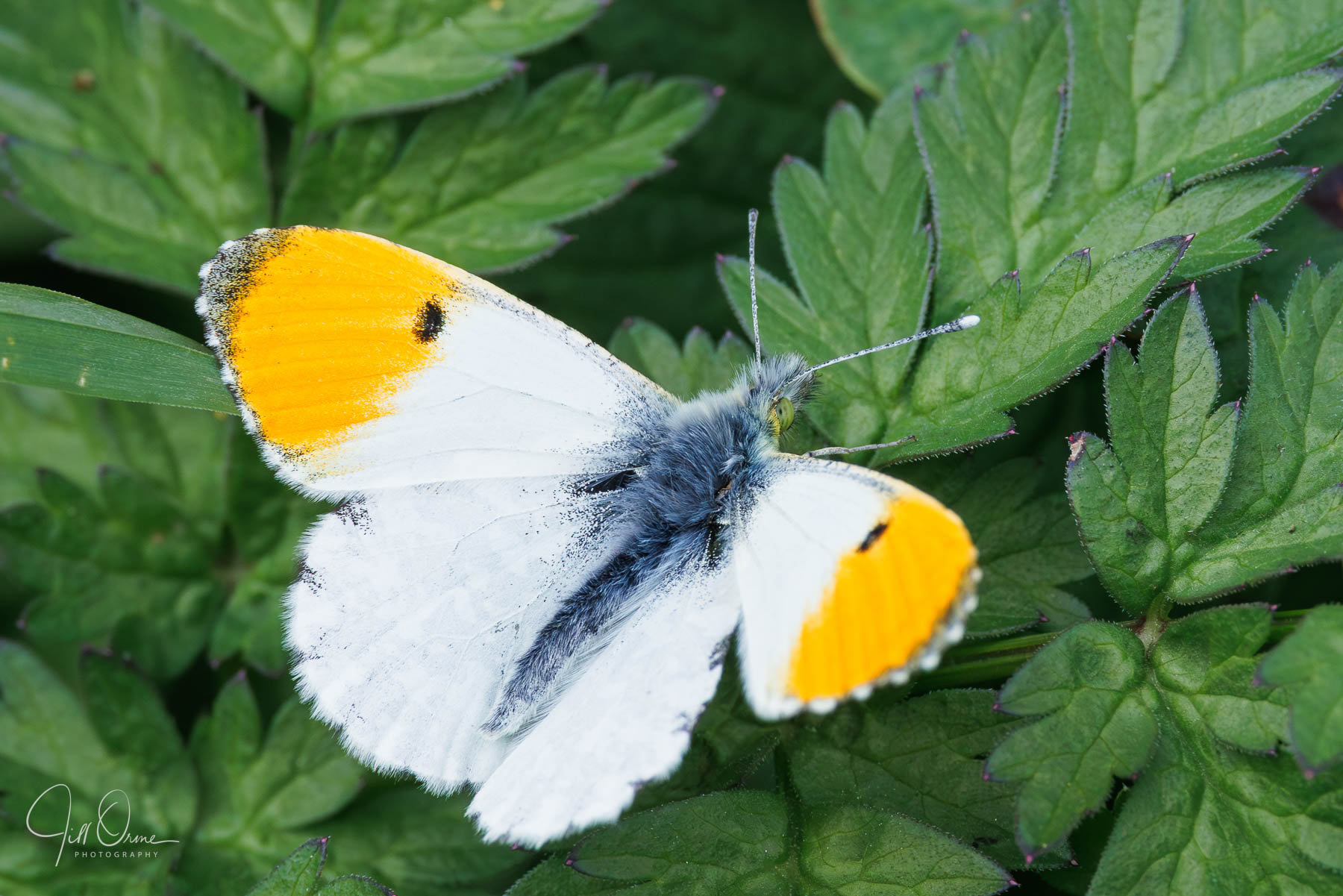
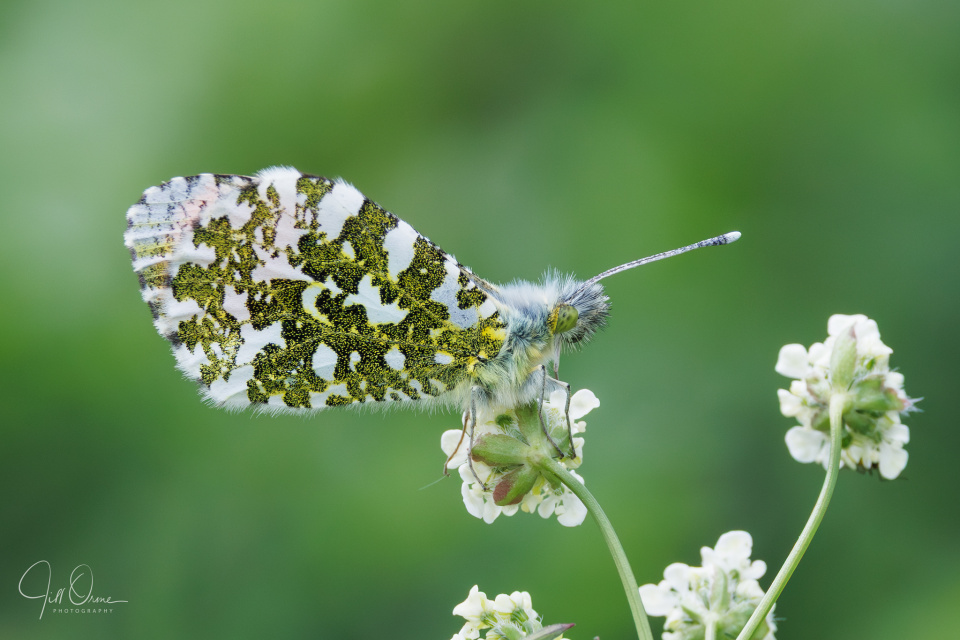
Happily, my last surprise was a great deal more pleasant, and that was the fact that the Mill area was absolutely teeming with butterflies. Within quarter of an hour I’d counted a dozen or more individuals across six species – numbers that many Butterfly Conservation sites would struggle to match – but I’m especially pleased with this male Orange Tip because he was the most skittish, and the trickiest to photograph. My second image shows him resting in the spot where I first tracked him to rest, and where I had to do a slow and stealthy game of Grandmother’s Footsteps to get into position without putting him to flight. However a little later he moved onto a clump of cow parsley, and settled right down in a way that made me think he was preparing to roost there overnight. This allowed me to get quite close and work round him in an arc, taking photos from different angles, and giving me the headline image which is R’s favourite of these roosting shots.
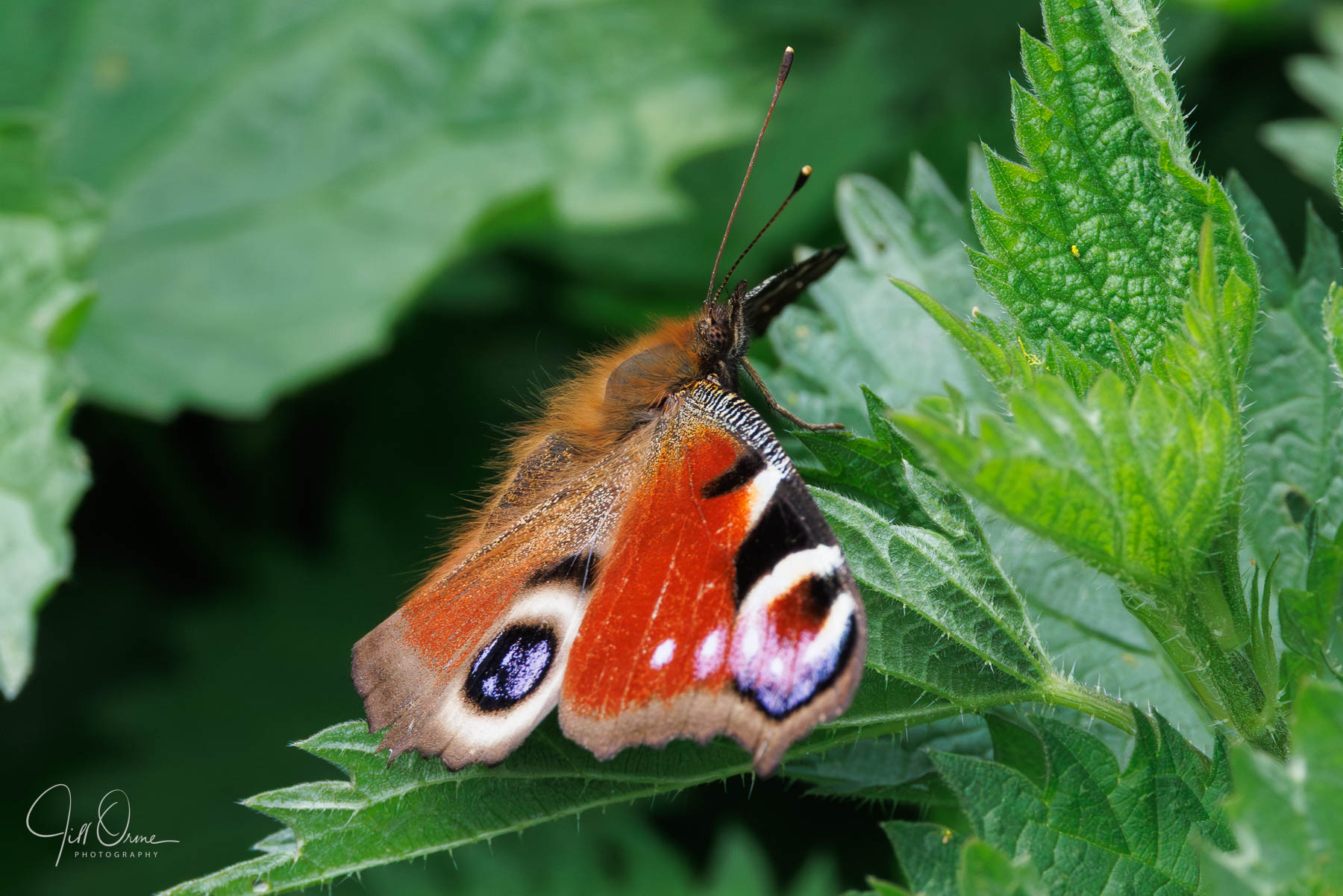
My third photo today shows one of several Peacocks that were fluttering about and competing for the best perching spots around the site. Their size, and almost black underwings, gave them a heart-stopping resemblance to Banded Demoiselles when they suddenly appeared in my peripheral vision, which meant that at times they were irritating me almost as much as they were annoying each other, but I do love a Peacock, and while I usually try to photograph them straight on, with fully outspread wings, I find I rather like this side-on view of the butterfly curving around a nettle. I must have photographed half a dozen different Peacocks at Cleeve Mill today, and most of them were in just as good condition as this specimen, which is remarkable when you think that they will have hatched last spring and emerged from pupation in the late summer. After feeding up through the autumn they’ll have hibernated through the winter, possibly in groups, in wood piles or hollow trees. Pre-hibernation they weren’t sexually mature, but now they’ve woken up they’re very focused on finding mates, so they can successfully complete their life cycles.
L2, C8, D11.


