
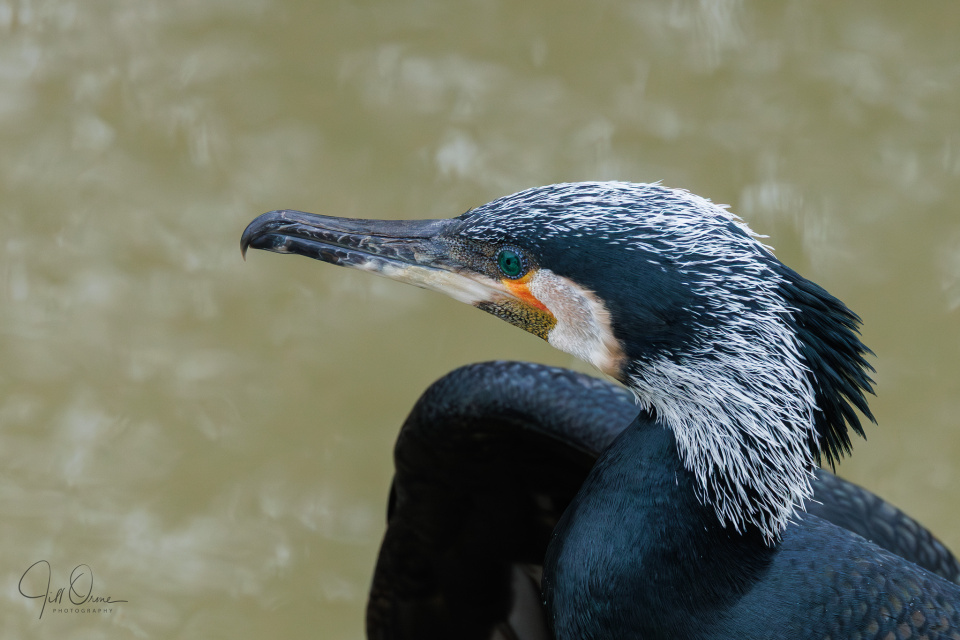
“It’s amazing,” said R, “that they go to all this effort every year, tarting themselves up, just to get a girlfriend.” I fondly remember a YSL suit and some rather look-at-me ties that R used to wear back in the day, which the uncharitable might have described as tarting up – but as I’m sure he’d have pointed out had I mentioned it, he didn’t have to grow the suit and ties himself.
So anyway, I’d agree that the annual transformation of many birds into special breeding plumage is pretty amazing – and I’d say that the Cormorant’s courting outfit is more outré than most. But putting in the extra effort clearly works for these birds, at a species level at any rate, because the Cormorant is currently green-listed in the UK. That said, its exact population status is hard to calculate, with birds from both the native and European races increasingly moving to inland waters from the coastal sites where the British birds have traditionally bred. The RSPB believes that there’s a slight downward trend in the number of breeding pairs in the UK, and the BTO, quoting figures from the Seabird Monitoring Programme, states that the current breeding number of around 9,000 pairs is about the same as it was in 1986. Still, with so many of our native birds in worrying decline, this looks very much like a success story.
A bonus fun fact about the Cormorant: its name means either ‘sea raven’, from the Latin corvus marinus, or possibly ‘bald raven’, from the Greek phalakros corax – but either way, the belief that Cormorants were a type of corvid persisted across Europe right through the Middle Ages.
R: L2, C5, D16.


