R had an OMG-hundred hours appointment in Stratford this morning, and given how many times he’s stepped up for me when the boot was on the other foot, I volunteered to drive him in, so that in the event of the traffic being totally snarled, he could simply abandon the car and walk the rest of the way. In the event, that didn’t happen, but I didn’t mind because 8.15am saw me sitting in BTP over my Kindle, coffee, a bacon roll, and a couple of hash browns. It was a tough gig, but someone had to tackle it.
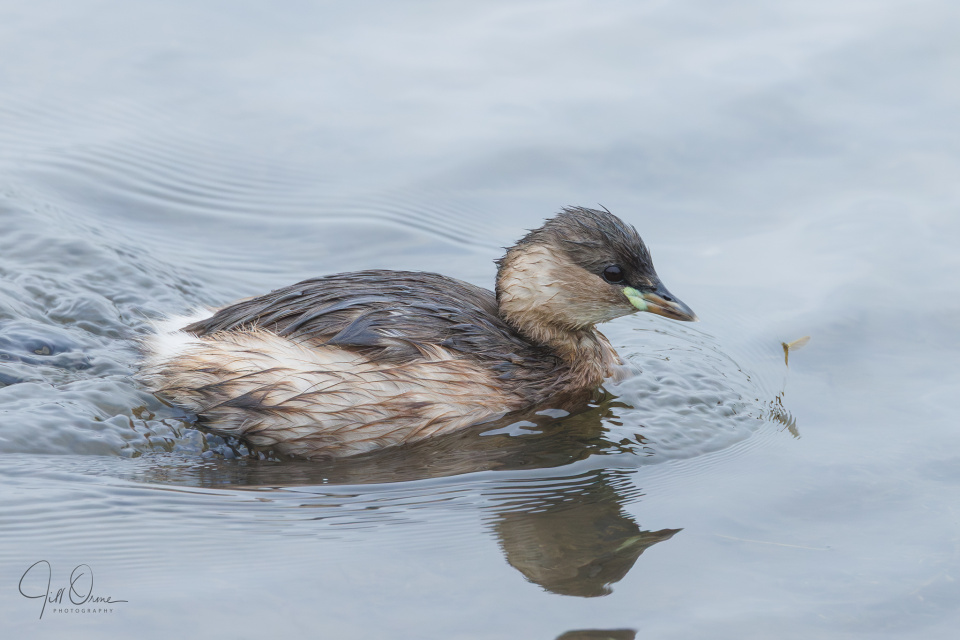
After breakfast I went birding, but found virtually nothing either at the river or in the churchyard. It was also far too cold for dragons. So once R rejoined me we headed home, and then, after regrouping and checking all the nearby bird alerts and blogs without spotting anything remotely interesting, I headed back out to Kemerton Lake. Whenever I walk into one of the hides at Kemerton and find no-one else there I immediately get a Bad Feeling, but despite the solitude, the vile light, and the teeth-grinding paucity of birds, I stuck it out for an hour or so, and was eventually rewarded with a few minutes of reasonably close Little Grebe action.
I only spotted the rather blurry insect in this image when I looked at it on a big screen, and I immediately began to try to work out what it could be. Given the shape and comportment, the obvious answer was a Mayfly dun – but surely it couldn’t be? It’s mid-October, after all. But as so often happens, provided you’re not looking for nuanced political debate or peace of mind, the internet was my friend, and rapidly educated me about the numerous species of Mayfly in the UK that are either bivoltine (double brooded), or emerge over an extended period of time. This 2003 journal article by Ephemeroptera expert Craig Macadam (which you can be sure I’ve bookmarked) even has a handy chart at the end, showing the months in which you can expect to see newly-emerged individuals of the more accurately named Upwing Flies, and by my count he lists nineteen species from a total British list of fifty one that could possibly be observed at this time of year.
So, I just learned something new. It doesn’t confirm the identity of the insect in my photo, but that matters a lot less than the fact that I now know more than I did yesterday. Plus, I had a bacon roll and hash browns for breakfast. All in all, today counts as a good day.


