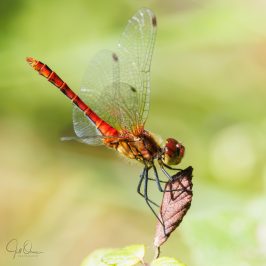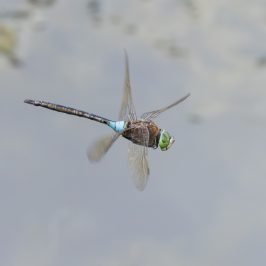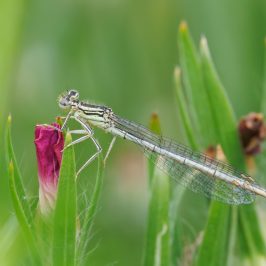

R and I went to Croome today, for lunch, walking, and odonates. The lunch and the walking were easily achieved, but Odonata were hard to find – at least until I made my second visit of the afternoon to the reed bed by the bridge across the lake outflow. Having found virtually nothing there on my first circuit, on this occasion there were at least two Migrant Hawkers, several Common Darters, one Ruddy Darter, and two or three male Willow Emerald Damselflies, all competing for possession of this small clump of foliage.
The first Willow Emerald Damselfly I ever saw was here at Croome, a couple of years ago, by the carriage splash pool at the far end of the artificial watercourse. Last year I didn’t find any on the estate, and because Willow Emerald females lay their eggs into the bark of tree branches directly overhanging still or sluggish water, I worried that drainage of the carriage splash pool to allow essential repairs to be made to the spillway might have damaged their chances of survival at this site. But I should have had more faith: having spread rapidly and effectively across the country over the past fifteen years, there was no reason to think that the Willow Emerald Damselfly would have any difficulty in spreading out along the tree-lined watercourse at Croome.
While writing this post I started to wonder about the etymology of the Willow Emerald’s binomial name, Chalcolestes viridis. ‘Viridis’ is the Latin word for ‘green’, which is no surprise, but less obviously, it turns out that ‘chalcolestes’ is based on two Greek words: ‘lestes’ meaning predator, and ‘chalcos’, which refers to copper, brass, or other metals. In good light the Willow Emerald tends to look quite brassy, so I’d imagine that this was the idea in the namer’s mind, but even in partial shade like this specimen, it retains a silky metallic sheen.