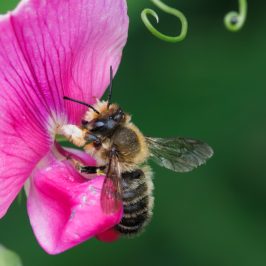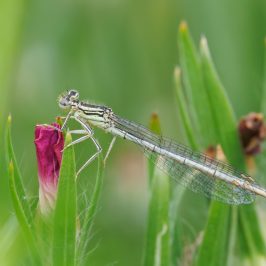
With rain forecast for the afternoon, I headed out around the village with the macro as soon as I’d dealt with the early Saturday morning chores, hoping to find some nice invertebrates among the flowering ivy. Most of the ivy hedges were still in shade at the time, and therefore quiet, but my wanderings eventually brought me to a sunny patch, which was already busy with insects.
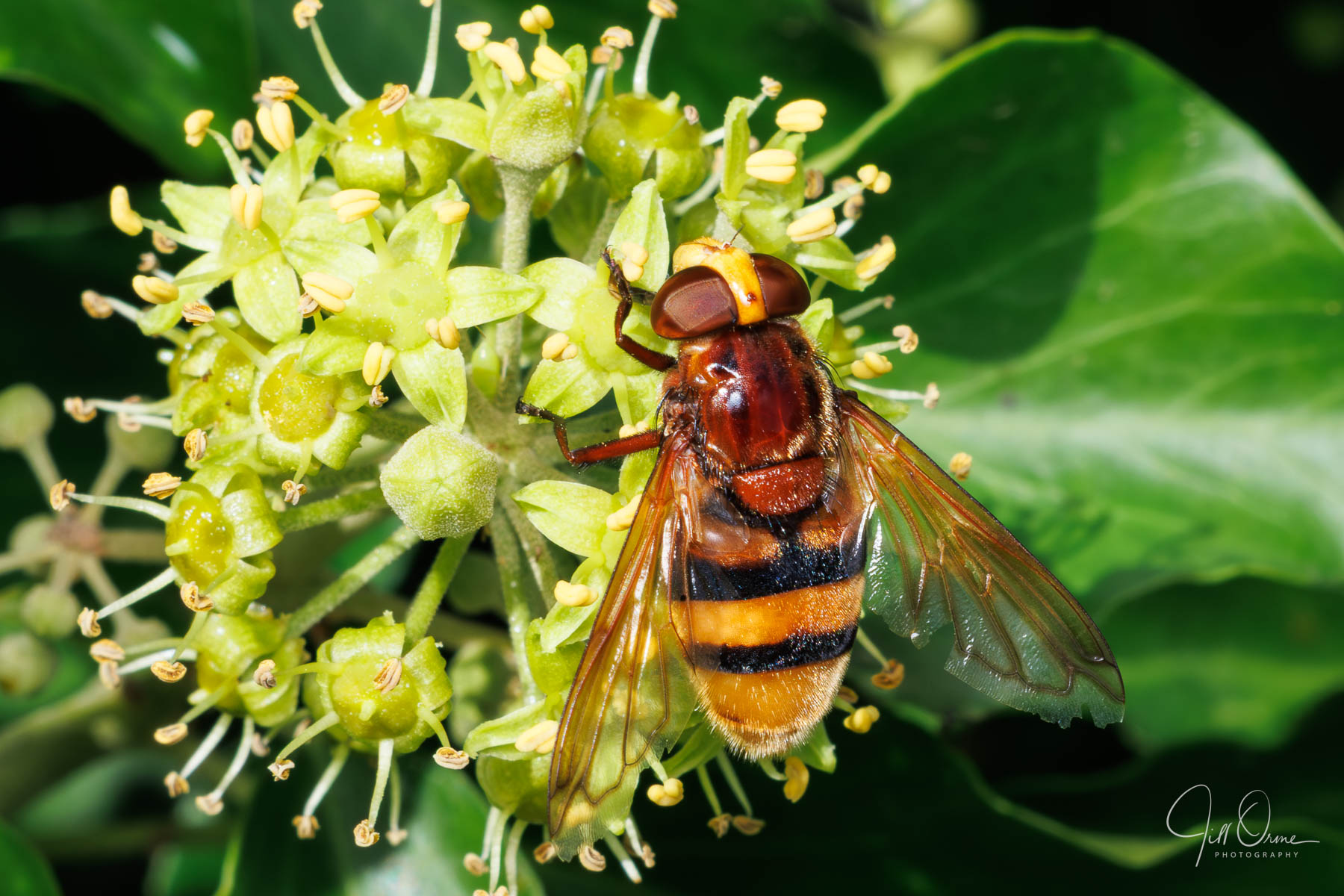
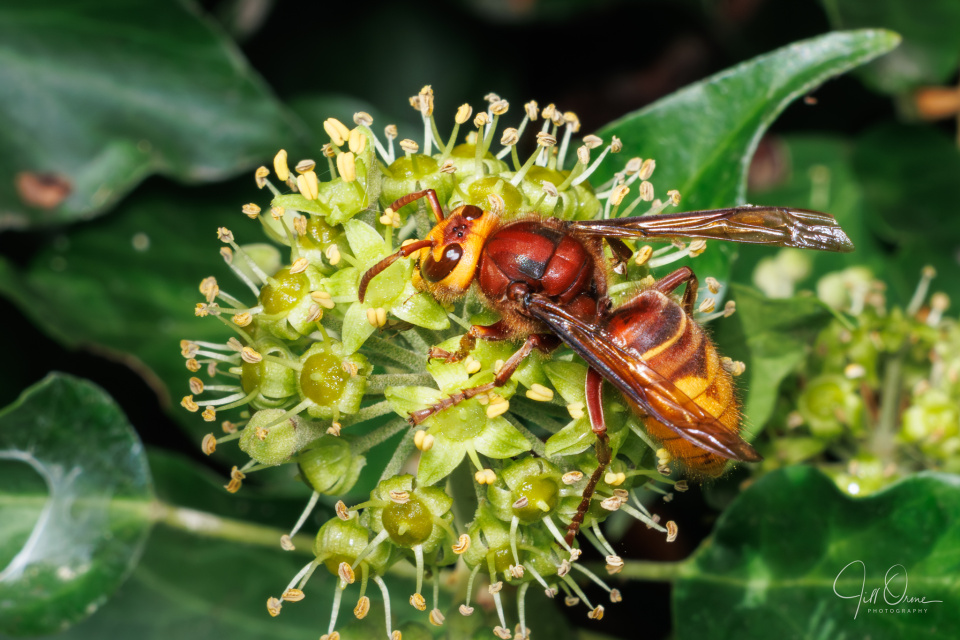
I was admiring the Hornet Hoverfly in my second photo, and thinking what a good job she was doing of pretending to be a Hornet, when a loud and furious buzzing went right past my left ear, and the subject of the mimicry thumped down in front of me on the same ivy head. The pretender immediately moved to a different one, which was a bit annoying because it would have been fun to get them in the same shot, but despite her impressive size the hoverfly is completely unarmed, and she clearly had no desire to risk provoking an even bigger and far more dangerous insect. And frankly, I don’t blame her – while I know that in theory European Hornets are relatively placid, and less likely to sting than a Common Wasp, I was slightly wary myself. So for the next few minutes the Hornet Hoverfly twitched out of the Hornet’s way whenever the latter moved from one flower head to another, and I’m embarrassed to say, so did I – thereby reducing my chances of capturing the double feeding shot from slim to none.
I thought at the time, and I’m even more confident now I’ve had the chance to look carefully at my photos, that this is a queen Hornet, which means that she’s armed at both ends: sharp cutting mandibles at the front, and a stinger at the back (males have the mandibles, but lack the stinger). But despite this, I think the hoverfly and I were actually pretty safe, and all that twitching was unnecessary. During the summer, worker Hornets will kill other insects and take the most nutritious bits back to their nests to feed the developing larvae, but the fresh males and queens that are around at this time of year tend to be pretty focused on eating sugar. The males need this to fuel their seemingly relentless search for the young queens, mating with whom is their only function in life, and the queens need it so they can lay down enough fat to see them through the winter hibernation they have to undertake, prior to establishing their own nests in the spring. In these circumstances the need to feed must be such an imperative that I doubt the Hornet had any interest at all in the other creatures around her, so long as none of us tried to separate her from the ivy nectar.