A couple of hours in Hillers bird hide this afternoon got me my first Siskin of the winter, and the first Brambling I’ve seen in nearly two years. Apart from this there were the usual suspects, including a small army charm of Goldfinches, which are probably the best-represented species in the woodland clearing these days, since Hillers began putting out sunflower hearts.
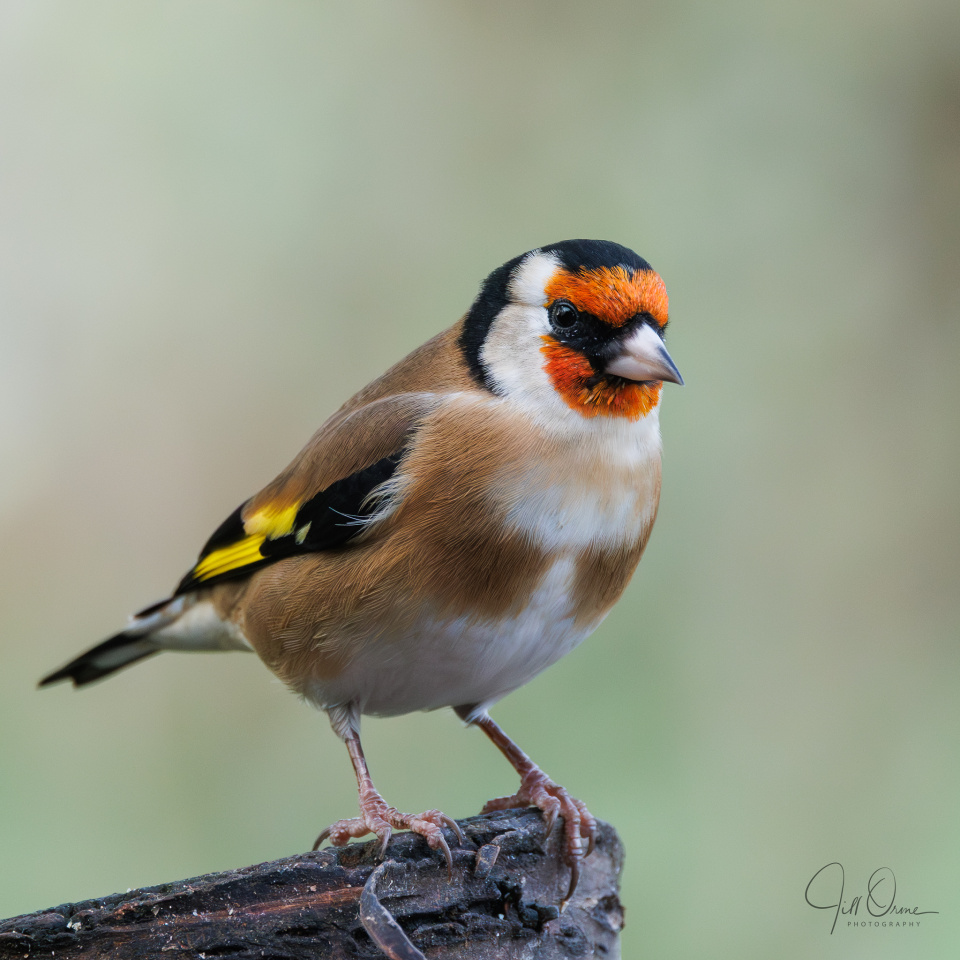
The Goldfinch is one of those birds we tend to take for granted, because they’re so common, but which when you look at one properly is really quite extraordinary. I mean – seriously? That crimson face mask? Those sunflower yellow wing bars? This is not a bird that hides its light under a bushel. It’s also, in my opinion, less charming than its collective noun suggests. In fact, given the argumentative and even aggressive behaviour you see from these birds around feeders, I’d suggest that a scuffle, or even an after-hours brawl of Goldfinches might be more appropriate.
Prior to the Second World War the Goldfinch suffered a great deal from human depredation in the UK, because large numbers were collected from the wild to be sold as caged birds. In the decades after the War its numbers increased steadily, before plummeting again in the 1970s and 1980s, possibly because of intensive farming practices, and maybe also because of pesticide use – this being a seed-eating species that’s strongly associated with wild plants such as thistles, teasel and dandelions. However, in the last forty years, helped by garden feeding, the Goldfinch population in the UK has soared – the RSPB estimating it at 1.6m breeding pairs, and the BTO at 1.7million – and the species is now Green-listed as being of least conservation concern. During the winter some British birds migrate south to the Continent, though numbers are partly replenished by incomers from northern Europe; it’s thought that more of the migrants are female than male.
The only other vaguely interesting thing I can think of to tell you about the Goldfinch is that while the sex of any individual can only really be determined by another Goldfinch, there’s a rule of thumb that says in a female the red forehead mask stops level with the back of the eye, whereas in a male it goes further back. However, the masks are pretty variable, so I wouldn’t go further than to say that this specimen is probably a male.
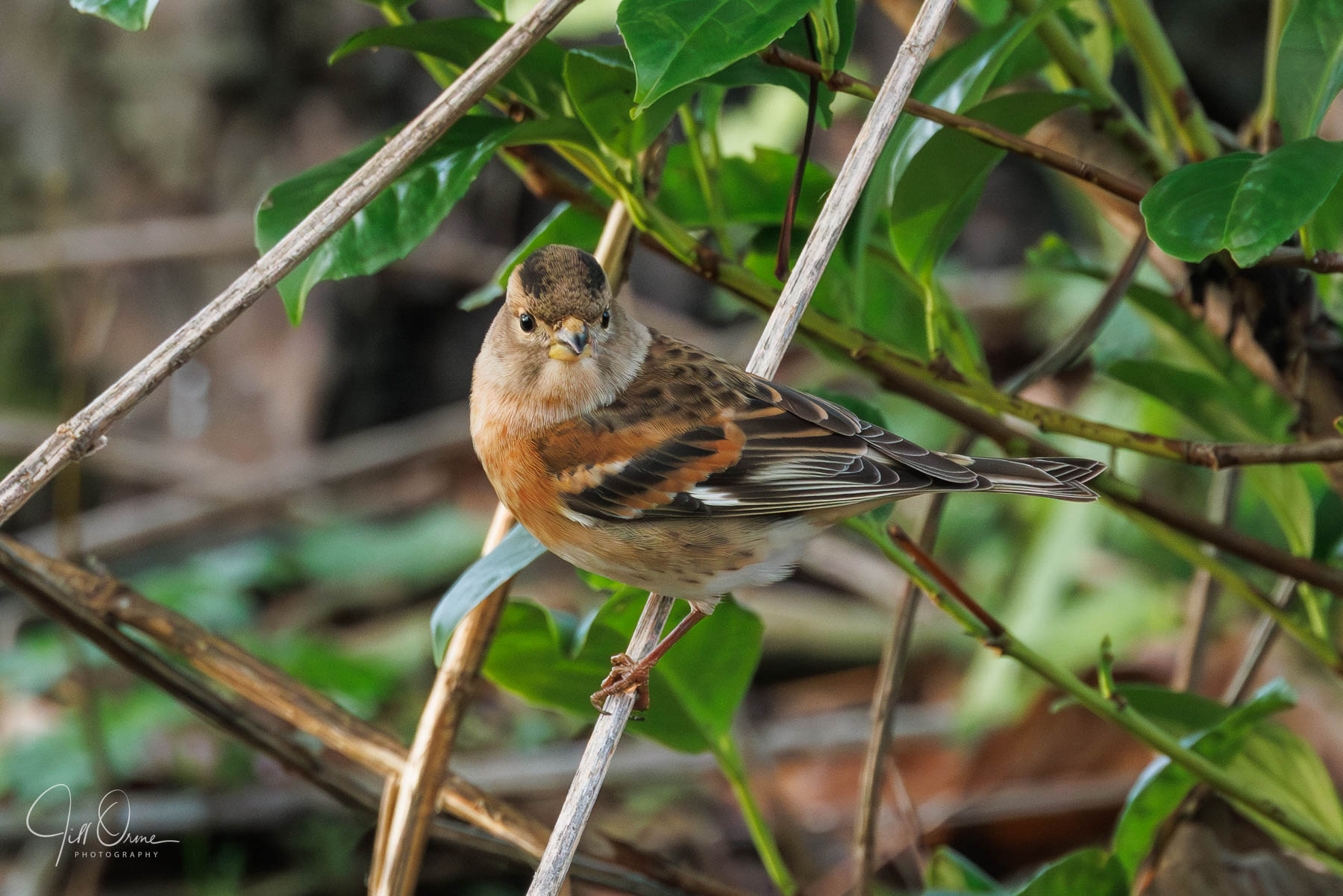
My second photo shows the female Brambling who showed briefly at the pond and in the shrubbery next to it, but sadly came no nearer than that.
R: L2, C1, D13.