
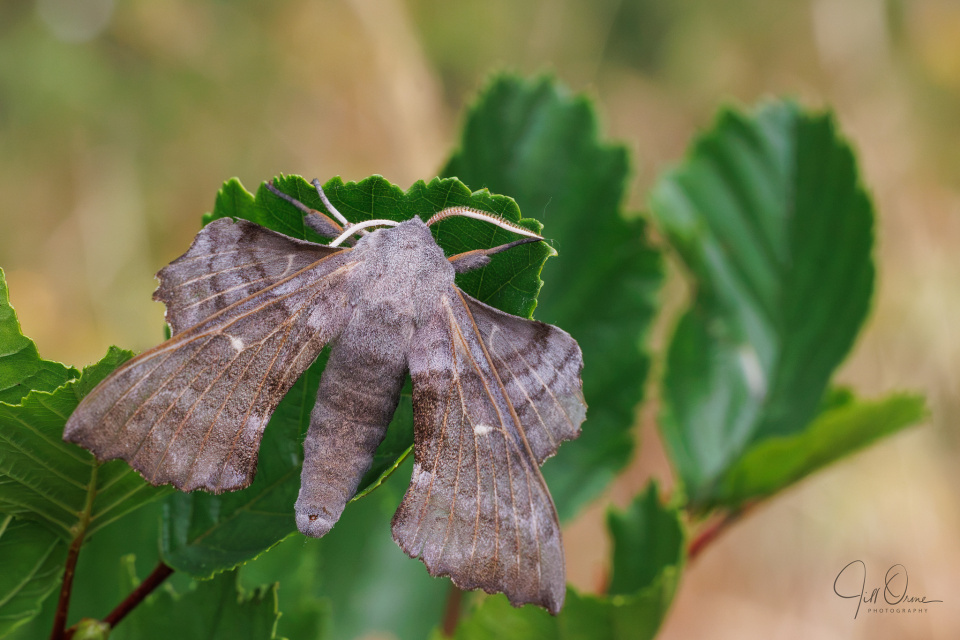
Would you just look at this absolute unit! It’s a Poplar Hawk-moth, and it was the star exhibit at this morning’s moth trap event at Kemerton Lake. The event was tacked on to an organised recording session which took place last night, with five traps being run and emptied at regular intervals, and the moths being sorted, identified and counted before release. By 7am, when the Conservation Trust members who’d signed up to the morning event arrived, the actual trapping had finished and there were only two box traps still on site, covered with sheeting to keep the moths calm and contained, but in addition a few of the most special finds from earlier in the night had been potted and put in a cool box in case those last two traps held nothing very interesting. In fact there were plenty of lovely moths in the traps, and while some of them were very keen to fly as soon as the sheeting was removed, others stayed around long enough to be closely examined and photographed.
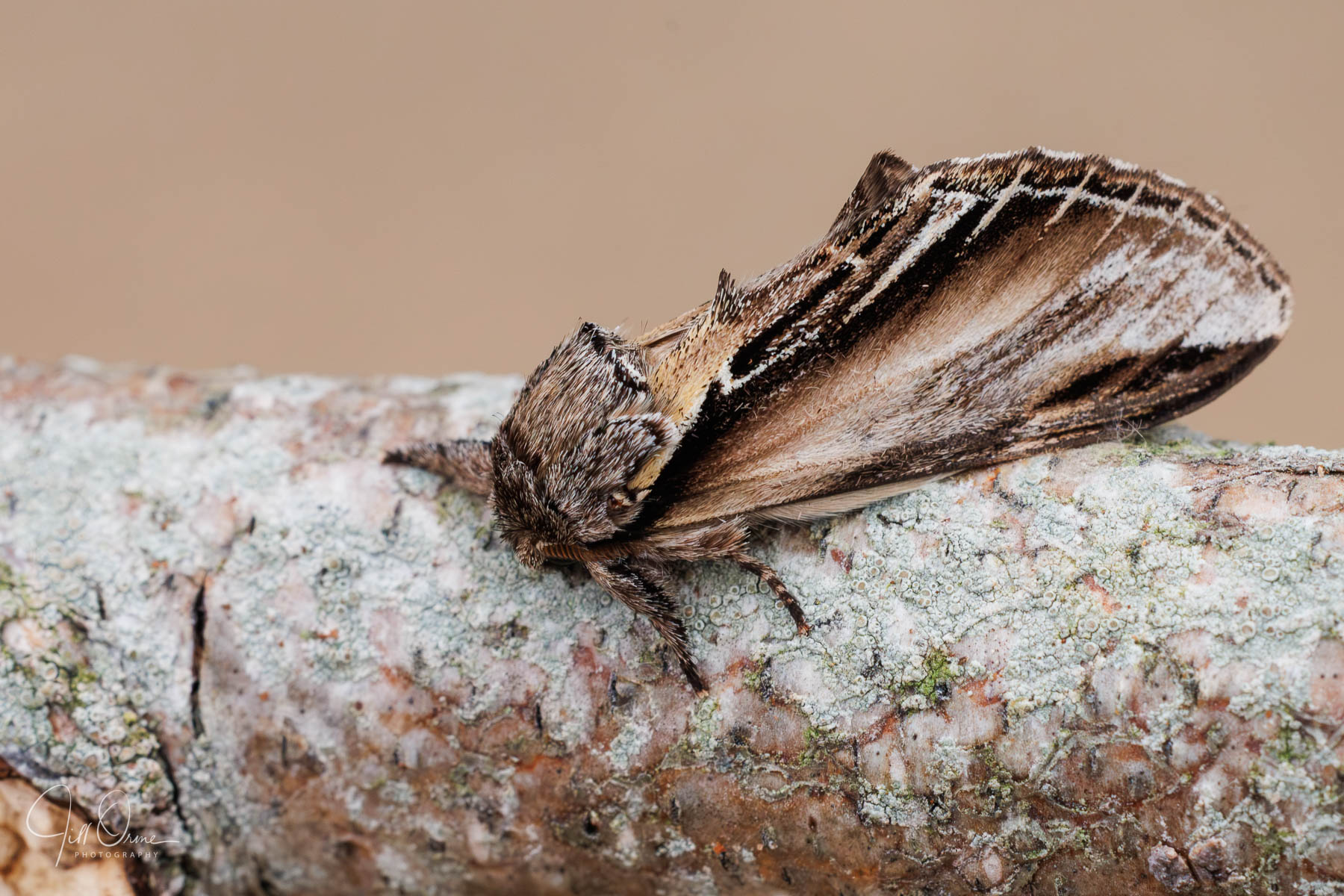
My second photo shows the most handsome of these – a Lesser Swallow Prominent, which is a fairly common moth in the UK, but which I’d never seen before. It has a wingspan of around 5cm, and its rather dangerous-looking larvae (which you can see in the NatureSpot gallery) feed on the leaves of birch trees.
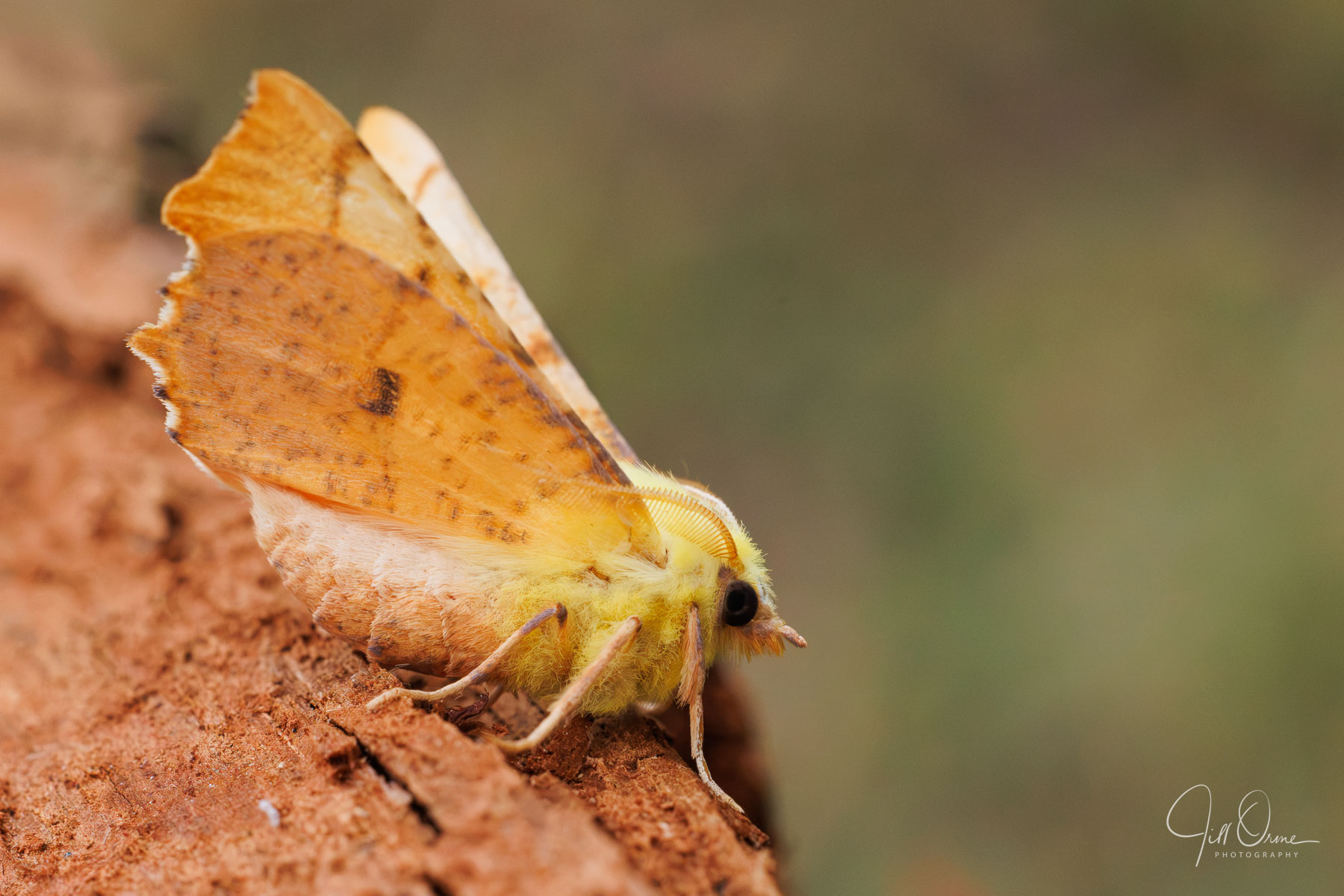
While the traps were being unloaded I asked the organiser what had been the team’s best find of the night, and she said, “Ooh – now, let me see – that’s an interesting question!”, but didn’t actually answer it, so I knew she had some goodies hidden away somewhere – and in due course the cool bag was opened and out they came. My third photo shows the prettiest, and the one which was most cooed over, probably because it looks as if it was designed by Pixar. It’s a Canary-shouldered Thorn, another quite common moth, whose larvae feed on birches and other broadleaved trees, and though I’d encountered it before, this male was such a nice, tidy specimen I thought he was well worth photographing.
But as I said earlier, for me the Poplar Hawk-moth was the star of the morning – though it was interesting to see that as the organiser unpotted him onto her hand several members of the group took a couple of steps back, rather than crowding forward to get a closer look. To be fair, with a wingspan of 6.5-9cm, and looking somewhat aggressive even at rest, you probably wouldn’t want one flying at your face. But this one was quite passive, and even after it had been moved onto a nearby beech sapling from which it could easily have flown away, it sat quite calmly through the rest of the event; one of the team moved it into shelter at the end, to avoid it catching the eye of passing birds. There’s quite a nice Wiki here on the Poplar Hawk-moth, including a photo of its spectacular caterpillar.
R: L2, C11, D3.


